


Breaking News
- Adani Group front runner to buy Jaiprakash Associates; stock falls 50% in six months
- Nykaa Shares Fall 4% After Block Deal; Banga Family Offloads 2% Stake
- SBI Declares Reliance Communications’ Loan Account as Fraud; Anil Ambani Named
- Stock Market Hits Record Highs as Big Tech and AI Stocks Surge
- Indian‑American Entrepreneur Books Island Near Singapore for Crypto‑Led ‘College Town’
- Crypto trader arrested in Rs 2 cr WhatsApp scam orchestrated by Pan-India cyber gang
- CA allegedly ran Rs 750 crore fake loan app scam using shell firms, Chinese links
- SBI Credit Card Rules Changing from July 15: Higher Minimum Payment, No More Free Air Accident Cover
- PNB Shares Dip as Q1FY26 Update Disappoints Brokerages
- Central Bank of India completes acquisition in Future Generali Insurance Arms
- Digital Banking Revolution: How AI and Fintech Are Reshaping the Banking Industry
- Master Trust Applies for SEBI Approval to Launch Mutual Fund Business
- Mutual Fund Exposure To NBFCs Surges 32.5% To ₹2.77 Lakh Crore In May, Driven By Commercial Papers & Corporate Debt: CareEdge Report


Digital Banking Revolution: How AI and Fintech Are Reshaping the Banking Industry
The banking sector is undergoing a massive transformation, with AI, fintech, and digital payments leading the revolution. Traditional banks are adapting to new-age technologies to stay competitive.
continue reading
The Future of Banking: How AI, Blockchain, and Fintech Are Transforming Financial Services
The banking industry is evolving rapidly with the rise of AI, blockchain, and fintech. Digital payments, neobanks, and automation are reshaping traditional banking, offering seamless and secure financial services.
continue reading
Digital Banking Revolution: How Technology is Reshaping the Future of Finance
The banking sector is witnessing a digital transformation driven by AI, blockchain, fintech, and mobile banking. Discover how these innovations are revolutionizing the financial landscape and enhancing customer experiences.
continue reading
How AI and Automation Are Reshaping Modern Banking
Artificial intelligence and automation are driving the next phase of banking innovation. From AI-powered chatbots to fraud detection and risk assessment, discover how these technologies are transforming financial institutions.
continue reading
The Future of Digital Banking: How AI and Blockchain Are Transforming Finance
The banking industry is undergoing a massive transformation with AI and blockchain. Learn how these technologies are shaping the future of digital banking.
continue reading
Why Neobanks Are Gaining Popularity: The Rise of Digital-Only Banking
Neobanks are changing the way people bank, offering low-cost, digital-only financial services. Find out why they are gaining massive popularity.
continue reading
How AI is Revolutionizing Loan Approvals and Credit Scoring in Banking
AI is transforming the loan approval process, making it faster and more accurate. Learn how banks are leveraging AI for smarter lending decisions.
continue reading
RBI Introduces New Digital Banking Guidelines to Enhance Security
The Reserve Bank of India (RBI) has announced new guidelines for digital banking, focusing on enhanced security, customer protection, and fraud prevention.
continue reading
How Neo-Banks Are Revolutionizing the Banking Industry
Neo-banks are redefining the traditional banking experience by offering digital-first solutions with zero physical branches and seamless online services.
continue reading
Top 5 Banking Trends That Are Shaping the Future of Finance
The banking industry is evolving with new trends such as AI automation, blockchain integration, and personalized financial services transforming the future of finance.
continue reading
The Rise of Contactless Payments: Are We Moving Towards a Cashless Society?
Contactless payments have seen a surge in adoption, raising questions about whether we are heading toward a completely cashless economy.
continue reading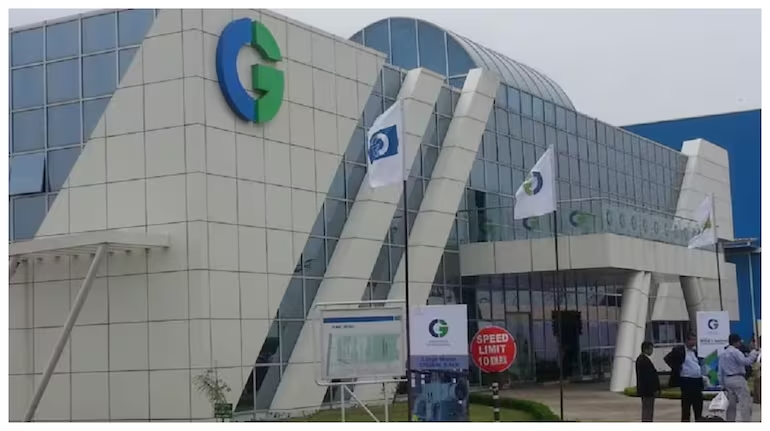
CG Power QIP Oversubscribed Threefold, Attracts ₹10,000 Cr in Bids
CG Power & Industrial Solutions has successfully concluded its ₹3,000 crore Qualified Institutional Placement (QIP), receiving bids worth approximately ₹10,000 crore — over three times the intended raise. The issue garnered strong interest from leading mutual funds, insurance companies, and long-only foreign portfolio investors (FPIs), with minimal allocation likely to hedge funds.
Major mutual fund bidders included Axis Mutual Fund, Aditya Birla Mutual Fund, WhiteOak Capital, and HDFC Mutual Fund, while insurance giants SBI Life Insurance and HDFC Life Insurance also made significant bids. BlackRock led the charge among FPIs.
The indicative issue price of ₹660 was set nearly 3% below the SEBI-determined floor price of ₹679.08 and about 3.25% lower than Monday’s closing price. The QIP represents approximately 2.89% equity dilution, assuming full subscription. Merchant bankers DAM Capital Advisors, IIFL Capital, and HSBC Securities managed the offering.
The fundraise closely follows CG Power's recent ₹641 crore order from Power Grid Corporation of India Ltd for a 765kV transformer package — its largest single order to date. Deliveries for this order are scheduled over the next 18 to 36 months, reinforcing CG Power’s strong momentum in the power infrastructure segment.
continue reading
HDB Financial Services IPO to List on July 2: Strong GMP Hints at Double-Digit Debut Gains
HDB Financial Services is set to make its stock market debut on Wednesday, July 2, 2025, following the completion of IPO allotment. Market buzz indicates strong listing gains, with the grey market premium (GMP) rising to Rs 72–75 per share, pointing to a possible 10% listing pop over the issue price of Rs 740.
Despite its aggressive valuation and risk profile, the IPO attracted massive investor interest—garnering bids worth Rs 1.61 lakh crore against a net offer of Rs 9,131 crore, translating to 16.69 times subscription. The QIB quota saw record demand with 55.47x subscription. Mutual funds, insurance firms, and long-only foreign portfolio investors were key bidders.
Market experts like Shruti Jain of Arihant Capital and Prashanth Tapse of Mehta Equities recommend a long-term hold strategy, citing HDB's strong digital capabilities and penetration into under-banked markets. The company is poised to benefit from India’s structural credit boom, with lending projected to grow 13–15% annually until FY28.
Investors are advised to hold the stock post-listing and consider adding on corrections, especially as the stock stabilizes over 3–6 months. With a diversified lending model and low NPAs (2.26%), HDB is seen as a strong player in the NBFC space.
continue reading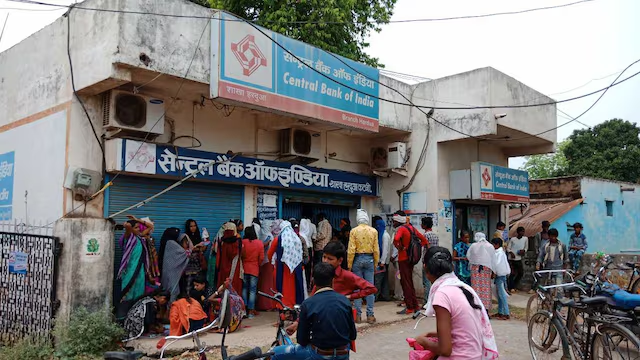
Central Bank of India completes acquisition in Future Generali Insurance Arms
In a strategic move to strengthen its presence in the insurance sector, the Central Bank of India has acquired equity stakes in both Future Generali India Insurance Company Ltd (FGIICL) and Future Generali India Life Insurance Company Ltd (FGILICL). The public sector bank now holds 24.91% in the general insurance arm and 25.18% in the life insurance arm. This landmark transaction was finalized through a series of binding agreements with Generali Group, including a Shareholders’ Agreement, a Trademark Licence Agreement, and a Distribution Agreement.
The Shareholders’ Agreement outlines governance and strategic roles between the Central Bank, Generali Participations Netherlands N.V., and FGILICL. The Trademark Licence Agreement provides Generali with limited rights to use the Central Bank’s trademarks. Furthering their bancassurance partnership, a Distribution Agreement enables FGILICL to leverage the bank’s nationwide network of over 4,500 branches to offer life insurance products.
With necessary regulatory approvals, including from the Reserve Bank of India (RBI), the bank is set to implement a broader insurance strategy. The synergy between Central Bank’s domestic reach and Generali’s global insurance expertise is expected to offer a wide range of innovative life, health, and general insurance products to Indian consumers.
continue reading
PNB Shares Dip as Q1FY26 Update Disappoints Brokerages
Shares of Punjab National Bank (PNB) fell over 1% to ₹111 on July 3 after its Q1FY26 business update failed to meet analyst expectations. Despite a year-to-date gain of 8%, in line with Nifty 50’s 7% rise, the bank's latest performance left brokerages unconvinced. Citi downgraded the stock with a “sell” rating and set a target price of ₹101, signaling a 9% downside. Morgan Stanley maintained its “underweight” view, citing moderating growth trends.
PNB’s provisional update showed a 9.9% YoY rise in global advances to ₹11.3 lakh crore and a 13% YoY increase in global deposits to ₹15.9 lakh crore. Domestic deposits grew 12% YoY to ₹15.4 lakh crore. However, the global credit-deposit ratio remained flat at 71.2%, indicating no change in the bank’s lending efficiency.
Citi noted that the growth in gross advances and deposits underperformed estimates, and that the RAM (Retail, Agriculture, MSME) segments would be the key drivers going forward. Morgan Stanley emphasized that loan growth had slowed to align with broader banking trends, with both domestic loan and deposit expansion moderating compared to the previous quarter.
continue reading
Motilal Oswal Eyes Revival in Banking Sector H2FY26; Picks ICICI Bank, HDFC Bank, SBI as Top Bets
Motilal Oswal Financial Services (MOSL) has released its latest sector outlook on Indian banks, forecasting a cautiously optimistic FY26 with expectations of a credit growth rebound in the second half. The brokerage identified ICICI Bank, HDFC Bank, and State Bank of India (SBI) as its top stock picks, citing robust fundamentals, strong loan growth, and stable asset quality.
MOSL highlighted a slowdown in systemic credit growth to 9.6% as of mid-June 2025, mainly due to cautious lending in the unsecured retail segment. However, it projects a recovery to 11.5% YoY by FY26-end. Systemic deposit growth remained moderate at 10.4% in June, with softening low-cost CASA inflows and banks trimming deposit rates in response to declining policy rates.
Net Interest Margins (NIMs) are expected to compress in H1FY26 due to lower lending rates, but should recover in H2 following a 100 bps CRR cut and improving liquidity. Asset quality remains broadly stable, though microfinance stress is a concern for mid-sized and retail-heavy lenders.
MOSL expects muted Q1FY26 earnings with PSU banks projected to grow PAT 4.8% YoY and private banks likely to see a 2.5% YoY decline. A strong earnings rebound is anticipated in H2FY26.
continue reading
SBI Credit Card Rules Changing from July 15: Higher Minimum Payment, No More Free Air Accident Cover
Starting July 15, 2025, SBI credit cardholders will face significant changes in billing and benefits. The Minimum Amount Due (MAD) formula is being revised. The new MAD will now include 100% of GST, EMIs, all fees and finance charges, any over-limit amount, plus 2% of the remaining outstanding balance. This change will substantially increase the minimum payable each month and help reduce long-term debt, but may put pressure on short-term budgets.
Additionally, the payment allocation order is being restructured. Payments will be first applied to GST, then EMIs, fees, and finance charges — only after these are cleared will they be applied to regular purchases or cash withdrawals. This can result in continued interest accumulation on retail spends unless the full balance is paid.
Another major change: SBI is discontinuing complimentary air accident insurance, previously ranging from ₹50 lakh to ₹1 crore on several cards like SBI PRIME, ELITE, IRCTC, and co-branded cards with partner banks. These benefits will end on July 15 (August 11 for partner-bank cards).
Cardholders are advised to review their card benefits and consider upgrading or switching if needed. Staying informed will help avoid hidden charges and optimize card usage.
continue reading
Brokerages Review Q1FY26 Outlook: Nomura, MOFSL Weigh In on BoB, AU SFB, Bandhan Bank, Bajaj Finance & L&T Finance
Leading brokerages Nomura India and Motilal Oswal Financial Services Ltd (MOFSL) have issued their outlook and stock ratings for major banking and financial institutions following their Q1FY26 business updates.
Bank of Baroda (BoB) was flagged by Nomura for weak loan and deposit growth, coupled with margin compression. While weak core PPOP is expected, treasury gains may offer a cushion. Nomura maintained a ‘Neutral’ stance.
AU Small Finance Bank (SFB) received a positive view from MOFSL for robust growth in advances and deposits, maintaining its momentum despite a high base. CASA and the CD ratio remained stable, prompting a ‘Buy’ call.
Bandhan Bank faced headwinds due to a significant drop in its microfinance book. Nomura expects muted Q1 performance due to margin pressure and elevated credit costs, reaffirming its ‘Neutral’ view.
Bajaj Finance showed strong growth in new loans and customer acquisitions, though deposit growth was muted due to a strategic shift. MOFSL issued a ‘Neutral’ rating.
L&T Finance was viewed positively with rising retail disbursements, especially in urban and SME segments. MOFSL maintained a ‘Buy’ rating, citing continued focus on retail lending.
continue reading
India Ranks Among World’s Most Equal Nations, Ahead of G7 & G20: World Bank
India has emerged as one of the most equal societies globally, according to a recent World Bank report, ranking 4th in income equality ahead of several G7 and G20 nations. This is a significant milestone for a country as vast and diverse as India. The report attributes this achievement to a series of inclusive policies and digital infrastructure developments such as Jan Dhan Yojana, Aadhaar, and Direct Benefit Transfers (DBT), which have enabled financial inclusion and reduced poverty drastically.
Extreme poverty in India dropped to 2.3% in 2022–23, with 1.71 million people lifted out of extreme poverty between 2011 and 2023. The country's Gini Index, a measure of income inequality, stands at 25.5—lower than China's 35.7—highlighting a more equitable income distribution.
Flagship initiatives like Ayushman Bharat, Atmanirbhar Bharat, Start-Up India, and the Pradhan Mantri Garib Kalyan Yojana are also contributing to the rise in income equality. Government efforts are now focused on expanding these schemes to underserved regions such as Bihar, Jharkhand, and parts of Kashmir and Tamil Nadu.
With over 55.69 crore Jan Dhan accounts and 142 crore Aadhaar cards issued, India is making rapid strides in bridging the socioeconomic gap, with a clear roadmap to becoming a fully inclusive and equal society.
continue reading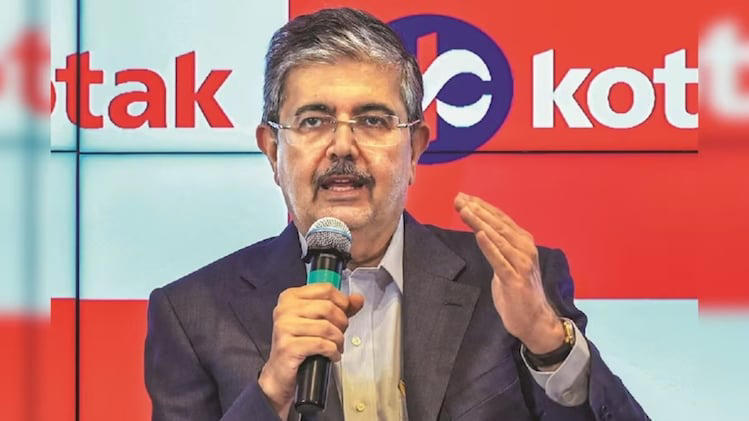
‘Money Power, Not Fundamentals’: Uday Kotak Flags Market Distortion Amid Jane Street-SEBI Row
Veteran banker Uday Kotak has raised red flags over structural distortions in India’s capital markets amid the ongoing regulatory storm involving US-based quant trading firm Jane Street. In a pointed social media post, Kotak warned that “money power,” thin liquidity in individual stocks compared to index derivatives, and volume-centric exchange-broker business models are increasingly overshadowing market fundamentals. His comments follow SEBI’s sweeping action against Jane Street, accused of manipulating expiry-day trades to distort index levels and mislead retail investors.
SEBI’s interim order, issued July 3–4, barred Jane Street from Indian markets and impounded ₹4,843 crore in alleged illegal profits. The firm, allegedly using mirror trades and complex cash-futures arbitrage involving offshore entities, is said to have made profits of ₹36,500–₹43,000 crore. SEBI claims the practices inflated index prices artificially and undermined fair price discovery.
Kotak’s remarks underscore rising concerns about the dominance of derivatives and opaque trading strategies in India’s booming financial markets. He reiterated that capital markets should prioritize capital formation and fair valuation over speculative trading. The episode has triggered a wider debate over the need for stronger oversight and more fundamentally driven investment practices in India’s world-leading derivatives ecosystem.
continue reading
CA allegedly ran Rs 750 crore fake loan app scam using shell firms, Chinese links
In a major breakthrough against inter-state cybercrime, the Uttarakhand Police cyber wing has arrested Chartered Accountant Abhishek Agarwal, the alleged mastermind behind a ₹750 crore fake loan app scam. Agarwal was detained at Delhi’s IGI Airport under a Look Out Circular (LOC). Investigations have uncovered a complex web of 35–40 shell companies, many registered in Agarwal’s and his wife’s names, with suspicious transactions linked to Chinese nationals, suggesting an international nexus.
The scam lured thousands via fraudulent mobile apps like 'Insta Loan', 'KK Cash', and 'RupeeGo', promising quick credit. Once installed, these apps accessed sensitive personal data, which was later used to blackmail and extort victims with threats of photo morphing and public shaming. The digital fraud ring reportedly began in 2019–20, with Agarwal facilitating Chinese nationals' entry into India and travelling to Shanghai and Shenzhen.
Authorities have already made several arrests in this case, including Ankur Dhingra from Gurugram and a call centre raid in Maharashtra. Agarwal’s arrest has provided crucial leads, and items including digital devices, cash, and documents were recovered. This bust highlights the growing sophistication and international links in cyber financial crimes targeting Indian citizens.
continue reading
‘New to Credit’ Borrowers Form Less Than 25% of Fresh Retail Loans in FY25: CRIF Highmark
In FY2024–25, first-time borrowers—those with no or limited credit history, classified as ‘New to Credit’—accounted for less than a quarter of all fresh retail loan disbursals across most segments, according to data from credit bureau CRIF Highmark. While their share has marginally improved year-on-year, the numbers reflect continued caution among lenders amid growing concerns around asset quality and borrower risk profiles.
Two-wheeler loans stand out as an exception, where nearly 49.2% of disbursed loans went to first-time borrowers, slightly up from 49.1% the previous year. This indicates the segment’s relative affordability and higher accessibility for credit newbies.
Industry experts attribute the overall muted participation of new borrowers to several factors—lack of sufficient credit history, uCRIF Highmark data reveals that 'New to Credit' borrowers formed less than 25% of total fresh retail loan disbursals in FY25, reflecting cautious lending practices. Two-wheeler loans are the only category where first-time borrowers constitute nearly half the disbursements, indicating relatively easier access. Experts cite lack of credit history, unstable jobs, and documentation issues as key hurdles for first-time applicants.nstable job profiles, multiple loan applications, and missing or incorrect documentation. Additionally, many applicants do not meet banks’ income eligibility criteria, further impacting approvals.
Lenders, wary of potential delinquencies, are prioritizing borrowers with established repayment track records, especially amid macroeconomic uncertainties and rising default risks. The trend highlights the need for improved financial literacy, better documentation, and credit profiling systems to include a broader segment of underbanked consumers into the formal credit system.
continue reading
IDFC First Bank Sets July 11 as Record Date for FY25 Dividend of ₹0.25 per Share
IDFC First Bank has fixed Friday, July 11, 2025, as the record date for its proposed dividend of ₹0.25 per equity share for the financial year 2024–25, according to a regulatory filing submitted on Monday. The dividend, representing 2.5% of the ₹10 face value per share, is subject to shareholder approval at the upcoming Annual General Meeting (AGM).
To be eligible for the dividend, shareholders must own IDFC First Bank shares before the ex-dividend date, which is typically one working day prior to the record date. The payout reflects the bank’s ongoing commitment to shareholder value, despite market fluctuations.
Earlier on April 26, 2025, the Board of Directors had recommended the dividend based on the bank’s performance for the year. This is part of the bank’s broader effort to reward long-term investors.
As of 2 PM on July 7, IDFC First Bank shares were trading at ₹77.63, down 0.30%. The stock, however, remains a strong performer over the longer term—up 175% in the last five years and 21% year-to-date (YTD).
The stock recently touched a 52-week high of ₹82.09 (July 4, 2024), and its market capitalization stands at ₹56,973 crore.
continue reading


